Causes And Treatment Of Pan-alkali On The Wall
May 27, 2020
The houses that have just been installed not long ago, and some old houses that are somewhat damp, are particularly prone to wall peeling and falling off. The black and white ones are called pan-alkali, also known as anti-alkali and anti-alkali.

Wall pan-alkali is a big deal, no matter whether it is a newly renovated house or a house staying for a period of time, no one wants this to happen.
Today we are here to give you a detailed explanation and processing method!
Ordinary concrete is a silicate. When it encounters air or water vapor in the wall, a hydrolysis reaction occurs, and the generated hydroxide combines with metal ions to form a hydroxide with a low solubility (chemical nature is alkaline). As it rises, the water vapor evaporates and the hydroxide is precipitated from the wall. As the water gradually evaporates, the hydroxide is precipitated on the surface of the concrete cement, which accumulates over time, causing the original decorative paint or paint to be lifted up. No longer sticking to the wall, whitening, peeling, and shedding occur. This process is called "pan-alkali".

Pan-alkali is a soluble alkali in concrete that migrates to the surface of the concrete with moisture, leaving "white frost" or white fluff-like substances after the moisture evaporates. In general, the possibility of pan-alkali on the backlight side and the leeward side is much smaller than that on the windward side and the sunrise side, or there is no pan-alkali at all.
This is because the sunrise and windward sides are conducive to the evaporation of water. During the drying of the concrete, when the excess water inside moves to the surface of the concrete, it must first move to the surface with large heat and fast evaporation, and it is brought to these The surface has more calcium hydroxide than other surfaces, and the pan-alkali is more serious than other surfaces.
Causes of pan-alkali on the wall
The reason why the wall will be "pan-alkali" must meet three factors at the same time:
(1) There must be a source of alkali in the wall. Because the wall is often in the form of light brick + plastering mortar, the mortar contains cement, and the hydration product of cement contains alkali, so this condition is easy to meet.

(2) There must be connected water seepage channels in the wall. Mortar is a porous medium, its porosity is much larger than concrete, and the thickness is often thinner, and the lime-sand ratio is very small, the cement is often 325 low-grade cement. In addition, if the sand contains mud, the hardened The mortar layer is easy to form a continuous water seepage channel, so this condition is also easy to meet.

(3) There must be moisture in the wall. The composition of the wall alkali mainly refers to calcium hydroxide after cement hydration, and of course also includes some salts. The wall alkali needs to be dissolved in water first, and then use water as a carrier to transport in the channel, and finally reach the wall surface and the air Carbon dioxide and other substances react to produce white calcium carbonate and calcium bicarbonate.
Only if the above three conditions are met at the same time can wall "pan-alkali" be indispensable, which means that we can cure "pan-alkali" by simply "cutting off" any of these factors.
Ubiquitin solution
One: Use permeable crystalline waterproof material to treat the ubiquitous base surface.
(1) Infiltration crystalline waterproof material can react with calcium hydroxide in mortar to form hydrated calcium silicate crystals, reducing alkali source;
(2) The generated crystals can block the capillary pores and cut off the connected pores. The quality requirements for water-borne infiltration crystalline materials are very high.

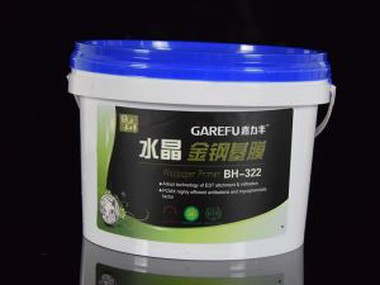
Two: Apply rigid film-forming materials, such as gold steel-type wall base film and crystal diamond wall base film, etc. This method is equivalent to covering the mortar layer with a layer of "armor".
Three: "Cut off" the water source is relatively cumbersome, but also the most difficult of the several methods. In the case of the pan-alkali connected to the bathroom, the source of water is the water accumulated under the bathroom floor tiles, which is returned through the siphon effect of the porous medium. If you want to remove all the water stored under the floor tiles, you can replace all the water by grouting, and ensure that no water will be stored in the future.
If the governance methods in the above directions can be used in a comprehensive manner, the effect will be more effective.
The treatment of pan-alkali is still a big problem. Pan-alkali focuses on prevention. As long as we start from the nature of the problem, take measures at the source, strictly control and scientifically prevent and prevent pan-alkali.